How to Generate Leads Online in 2026: 15 Strategies to Get More Customers
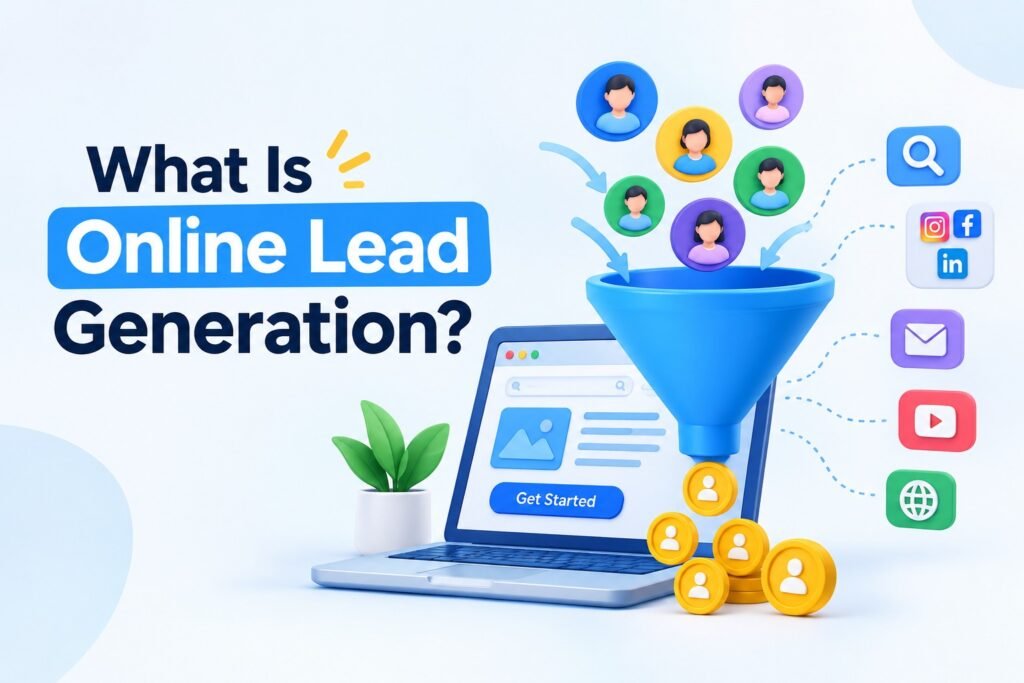
Getting people to notice your business online is only the first step. The bigger challenge is turning that attention into real conversations, enquiries, and potential customers. A business can have a website, social media accounts, and regular content but still struggle with a simple question: how to generate leads online consistently? The good news is that lead generation does not depend on one platform or one marketing tactic. Businesses can combine content, search, social media, landing pages, email, referrals, advertising, and other channels to build a predictable system for attracting potential customers. In 2026, this process is becoming even more multi-channel. People are discovering businesses through traditional search, social platforms, video, maps, and increasingly AI-powered search experiences. Google has also expanded Search Console reporting around multimodal search, showing how search is moving beyond traditional text queries. In this guide, you’ll learn 15 practical strategies to generate leads online, how to choose the right methods for your business, how to measure performance, and how to turn more of your online visitors into genuine prospects. What Is Online Lead Generation? Online lead generation is the process of attracting people who may be interested in your product or service and encouraging them to take a meaningful action. That action could be: A lead is not automatically a customer. For example, someone may visit your website and download a free guide. That person has shown interest, but they have not necessarily decided to buy anything. The basic journey looks like this: Attract → Engage → Capture → Nurture → Convert 1. Attract Bring the right audience to your business through search engines, social media, content, advertising, referrals, or other channels. 2. Engage Give visitors useful information that answers their questions and builds interest. 3. Capture Give interested visitors a clear opportunity to become leads through a form, consultation, newsletter, offer, or other conversion point. 4. Nurture Follow up with useful information and help the prospect understand your offer. 5. Convert When the prospect is ready, move them toward a purchase, booking, enquiry, or another business goal. The goal is therefore not simply to generate more traffic. It is to attract the right traffic and create a clear path from attention to action. 15 Strategies to Generate Leads Online in 2026 1. Create Content That Solves Real Customer Problems One of the most sustainable ways to generate leads is to create content around the questions your target customers are already asking. Instead of constantly talking about your business, create content that helps people solve problems. For example, a real estate company could publish: A fitness business could create: The key is to connect useful information with the problems your potential customers actually have. How to implement it Don’t create content simply because a keyword has search volume. Create content because it provides a useful answer. 2. Optimize Your Website for Lead Generation Your website should not only explain what your business does. It should make it easy for interested visitors to take action. A visitor should quickly understand: Important conversion elements include: For example, instead of ending a page with nothing, you could provide a simple CTA such as: “Want to discuss your requirements? Book a consultation.” The CTA should match the visitor’s intent rather than aggressively pushing them to buy. 3. Use SEO to Attract High-Intent Visitors Search engines can connect your business with people who are actively looking for information, solutions, or products. This makes SEO an important part of how to generate leads online, particularly for businesses that want long-term organic visibility. Start by understanding search intent. Someone searching: “what is digital marketing?” has a different level of intent from someone searching: “digital marketing agency for small business” The first person may simply be learning. The second may be closer to contacting a provider. Your SEO strategy should therefore target different stages of the customer journey. Create content for: Also focus on helpful, original content rather than producing large quantities of repetitive pages. Google’s 2026 documentation continues to emphasize Search quality and spam policies across traditional and generative search experiences. 4. Create Dedicated Landing Pages Sending every visitor to your homepage is not always the best approach. A dedicated landing page can focus on one audience, offer, campaign, or goal. For example: Campaign: Free business consultation Landing page: A page explaining the consultation, its benefits, what the visitor will receive, and how to request it. A good landing page should have: The page should answer the visitor’s basic questions before asking for their information. 5. Use Social Media to Build Demand Social media is not only for gaining followers. It can help businesses: In 2026, customer journeys are increasingly spread across multiple platforms. Research from BCG notes that social media remains an important touchpoint for reaching and influencing consumers in Asia, while social platforms are increasingly integrated with commerce. Instead of posting only promotional content, use a balanced content mix: Educational + Demonstration + Proof + Engagement + Promotion For example, a software company could show a common customer problem, explain how to solve it, demonstrate its approach, and then provide a relevant CTA. 6. Use Short-Form Video Content Short-form video can help businesses communicate an idea quickly and show their personality, expertise, products, or results. Potential formats include: The goal isn’t simply to make videos go viral. A better goal is to attract people who are actually relevant to your business. For example, a wedding photographer could create a video titled: “3 Things Couples Should Ask Before Booking a Wedding Photographer.” Someone who finds that useful is much more relevant than a random viewer who watches an entertaining video unrelated to the business. 7. Offer a Useful Lead Magnet A lead magnet is something valuable you give a visitor in exchange for their contact information. Examples include: The lead magnet should solve a specific problem. For example: Weak offer:“Download Our Marketing PDF” Stronger offer:“Download the Small Business Instagram Content Checklist” The second offer tells the visitor exactly what they will
Hello world!
Welcome to WordPress. This is your first post. Edit or delete it, then start writing!